Natasha’s Law PPDS Allergen Labelling Standards
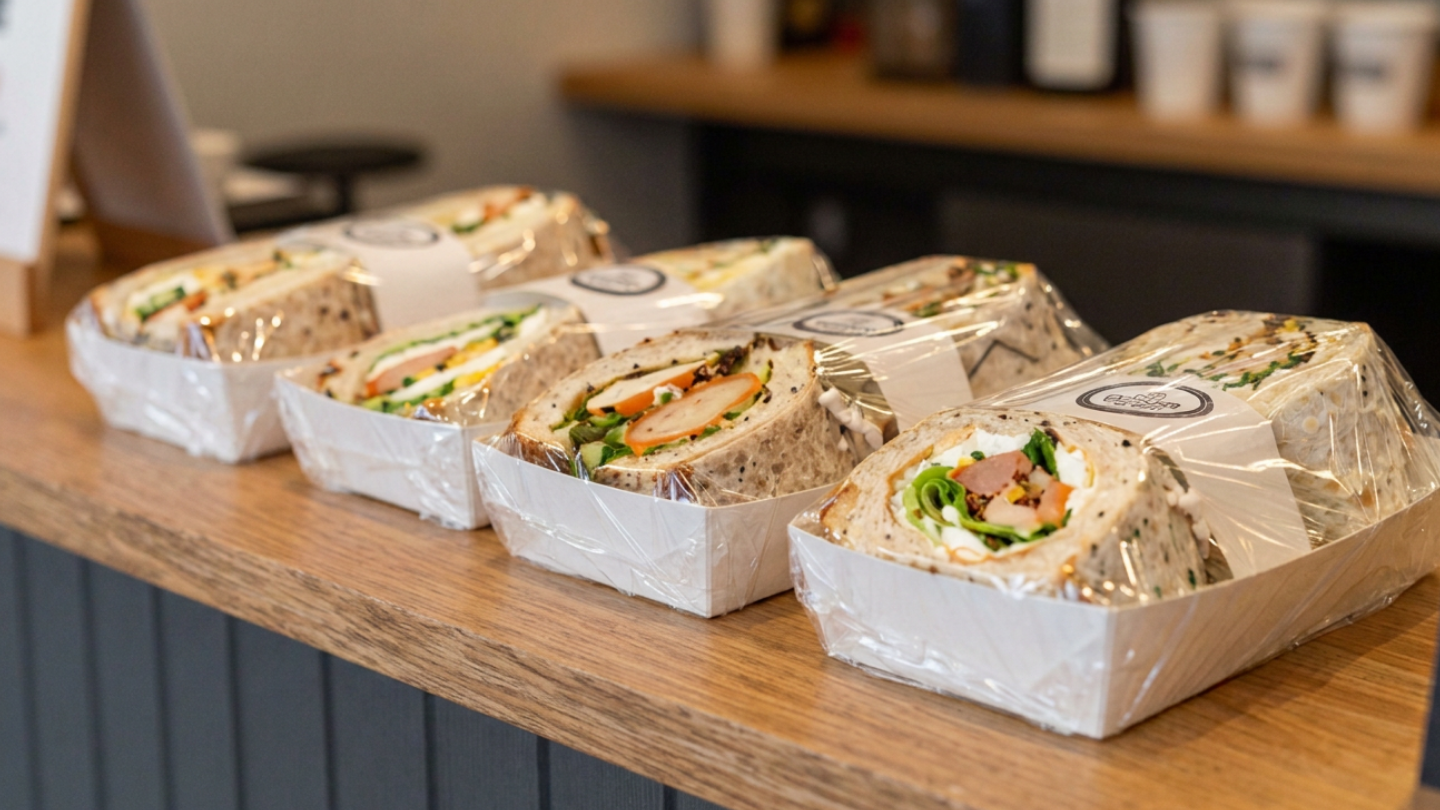
Natasha’s Law protects consumers with severe food allergies across the United Kingdom. It mandates that any food prepared and packaged on-site before a customer orders must carry a clear, comprehensive label showing all ingredients and highlighted allergens, in force since October 2021.
Who Does It Apply To?
- Any operator packing foods on-site before selection.
- Includes independent cafes, farm shops, delis, and school canteens.
- Applies to direct point-of-sale items (sandwiches, wraps, sweet bakes).
What Does Natasha’s Law Require?

Ingredient List
Labels must feature a full list of ingredients in descending order of weight across all on-site packaged items.

14 Major Allergens
The 14 major regulatory allergens must be emphasised clearly on the label, typically in bold or contrasting typography.

Descriptive Naming
The clear descriptive name of the food product must be clearly visible and legible, placed prominently on the primary label.

No Scale Exemptions
No exceptions based on outlet count or location size. The PPDS labelling mandate applies universally across all UK operators.
UK Food Information PPDS Rules: Ingredient & Allergen Declarations
Food Information (Amendment) (England) Regulations 2019
(1) Name of the Food: Every prepacked for direct sale (PPDS) food product must carry a clear, visible label showing the descriptive name of the food.
(2) Ingredient Disclosures: A comprehensive, on-label list of ingredients must be maintained, with ingredients listed in descending order by raw weight.
(3) Highlighted Allergen Emphasis: Any of the 14 major regulatory food allergens present must be emphasised clearly within the ingredient list using distinctive formatting (such as bold or capitals).
(4) universal application: PPDS rules apply to any food packaged before a customer selects it on the premises, regardless of whether the business is a small retail bakery or a national chain.
(5) Non-Prepacked Distinction: Non-prepacked foods (e.g. pastries placed in loose bags after ordering) are excluded from the full label rule, though accurate allergen matrices must remain readily accessible.
Action Areas for Food Operators
Secure your ingredient databases, implement robust labelling systems, and design preparation workflows to guarantee compliance with Natasha’s Law:
Supplier Audits
Verify raw ingredient specifications directly with suppliers, logging potential substitution risks before products arrive.
Recipe Integration
Maintain standardised digital recipe logs that instantly capture and document changes in raw ingredient profiles.
Segregated Stations
Establish colour-coded food preparation boards and dedicated utensil packages to prevent physical allergen cross-contact.
Automated Labelling
Use thermal labelling software linked directly to central recipe profiles, reducing manual packaging errors.
Staff Verifications
Conduct verified, recorded allergen labelling refresher training covering cross-contact prevention and packaging checks.
Audit Checks
Execute shift-start verification audits to confirm current packaging batches match approved, registered master recipes.
PPDS Labelling Questionnaire
Use our interactive self-audit tool below to assess your current compliance level under UK PPDS standards. Complete each checkpoint to calculate your risk index, then submit your details to view your finalized remediation gaps.
1 Packaging & Scope
2 Descriptive Product Naming
3 On-Label Ingredient Disclosures
4 Allergen Emphasis Rules
5 Supplier Verification Controls
6 Cross-Contact Management
7 Staff Training Logs
8 Label Verification Audits
Submit Audit & View Report
Submit your details below to save your live interactive assessment and instantly view your dynamic PPDS scorecard, risk profile, and outstanding remediation gaps on this page.
Want to check if you’re fully compliant?
We can answer compliance questions or support with allergen management systems, get in touch today.
PPDS Labelling FAQ
What is Natasha’s Law?
Natasha’s Law is the common term for the Food Information (Amendment) (England) Regulations 2019. It requires all food businesses in the UK to provide full ingredient lists with allergen emphasis on foods packaged on-site before being ordered by customers (Prepacked for Direct Sale).
What does ‘Prepacked for Direct Sale’ (PPDS) mean?
PPDS refers to food that is packaged at the same premises from which it is being sold to the public, before the customer selects or orders it. This commonly includes sandwiches prepared on-site, boxed salads, bakery items placed in bags, and deli counter wraps.
What must be clearly displayed on a PPDS food label?
Labels must clearly display the descriptive name of the food product, a full list of ingredients in descending order of weight, and clear graphical emphasis (such as bold, italics, or highlighting) for any of the 14 major regulatory allergens present.
Does Natasha’s Law apply to small food businesses?
Yes, there are absolutely no exemptions based on business size or location count. Natasha’s Law applies universally to all UK food operators—including independent cafes, school kitchens, bakeries, delis, and pop-up food stalls.
Does the law apply to food boxed after the customer requests it?
No. If a customer orders a loose pastry or sandwich, and staff then place it in a bag or box, it is classified as non-prepacked food. These items do not require full PPDS labels, though accurate verbal or written allergen indicators must still be readily accessible.
How should the 14 major allergens be emphasised on the label?
Allergens must be emphasised in a way that makes them stand out from the rest of the ingredient list. This is typically achieved by styling the allergen name in bold text, capital letters, or a contrasting font colour (e.g. ‘Ingredients: Flour (**WHEAT**), Milk (**MILK**), Salt’).

© 2025 Food-Regulations.org. All rights reserved. Original content, analysis and guidance are the intellectual property of Food-Regulations.org and may not be reproduced or republished without permission or appropriate attribution. This website is provided for educational purposes only and does not constitute legal advice. While we aim to keep information accurate and up to date, Food-Regulations.org and Nutritics accept no liability for any reliance placed on its content.