Author: Dr Laura Kirwan PhD

  • Food service green claims guide: Navigating the Green Claims Code and Empowering Consumers Directive (EmpCO)

    Food service green claims guide: Navigating the Green Claims Code and Empowering Consumers Directive (EmpCO)

    Food Service Green Claims Guide: Navigating the Green Claims Code & Empowering Consumers Directive (EmpCO)
    FOOD SERVICE REGULATORY COMPLIANCE

    FOOD SERVICE GREEN CLAIMS GUIDE
    NAVIGATING THE GREEN CLAIMS CODE AND EMPOWERING CONSUMERS DIRECTIVE (EmpCO)

    Environmental claims across food service operations – such as “sustainably farmed”, “eco-friendly packaging”, or “low-carbon dish” – are now subject to strict legal enforcement in the UK and Europe.

    Regulators have moved beyond voluntary guidelines to mandatory consumer protection laws with severe financial penalties. Food service businesses operating in the UK must comply with the CMA’s established Green Claims Code, while those distributing across Europe must prepare for the EU Empowering Consumers Directive (EmpCO) deadline of September 2026.

    Food service operators must now align packaging, menus, and digital marketing copy with the Competition and Markets Authority (CMA) established Green Claims Code, and the EU’s incoming Empowering Consumers for the Green Transition Directive (EmpCO EU 2024/825).

    EXISTING REGULATIONS VS. EMPOWERING CONSUMERS DIRECTIVE (EmpCO): WHAT IS CHANGING?

    Environmental marketing in food service is transitioning from voluntary self-regulation to legally binding prohibition backed by direct financial penalties. To safeguard business margins and brand reputation, commercial buyers and operations leads must evaluate how existing rules compare with incoming legislation:

    EXISTING REGULATION: UK CMA GREEN CLAIMS CODE & ASA

    EXISTING LEGISLATION

    • 6 Core Principles: Claims must be truthful, unambiguous, account for full lifecycle impact, backed by verified evidence, and offer fair comparisons under the CMA Green Claims Code.
    • Broad Operational Scope: Covers all consumer-facing channels including digital menus, takeaway packaging, social media marketing, and delivery aggregator listings.
    • Enforcement & Direct Fines: Co-regulated by the UK CMA and the ASA, backed by direct civil penalties of up to 10% of global annual turnover under the Digital Markets, Competition and Consumers Act 2024.
    INCOMING LEGISLATION: EU EmpCO DIRECTIVE (EU 2024/825)

    NEW LEGISLATION (September 2026)

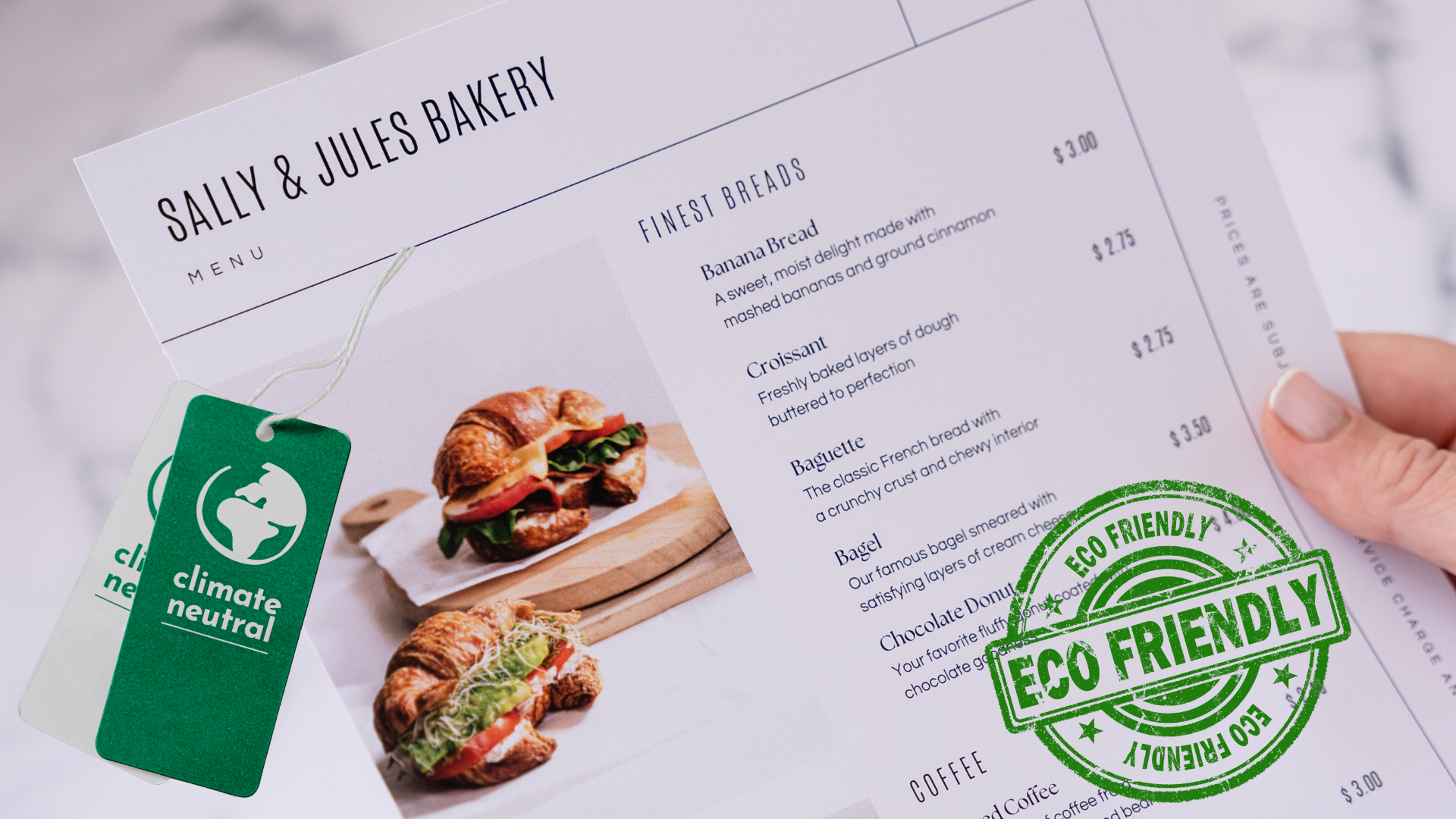
    • Blacklisting Generic Terms: Total prohibition of generic descriptors like “eco-friendly,” “green,” “bio-based,” or “climate-smart” without verified, recognized environmental excellence.
    • Total Carbon Offset Ban: Strict legal ban on claiming menu items or packaging are “carbon neutral,” “net zero,” or “climate-compensated” via external offset purchases under EmpCO Directive (EU 2024/825).
    • Verification Mandate: In-house eco-badges or custom environmental logos are not allowed unless backed by official public schemes or accredited third-party certification.

    COMMERCIAL & OPERATIONAL IMPACT ON FOOD SERVICE BUYERS

    Substantial Financial Risk: Relying on unverified supplier claims or offset credits leaves businesses exposed to severe regulatory fines (up to 10% of turnover under UK DMCC powers) and forced public retractment notices. Food service leads must transition away from manual, paper-based claims tracking toward automated, software-driven Lifecycle Assessments (LCA) at the recipe and ingredient level.

    THE THREE PILLARS OF LEGAL GREEN CLAIMS COMPLIANCE IN FOOD SERVICE

    Achieving long-term compliance across catering and food service operations relies on three core operational pillars:

    Compliance manager auditing automated food service recipe LCA and packaging environmental claims softwarePILLAR 1

    AUTOMATED LIFECYCLE SUBSTANTIATION

    Under the CMA Green Claims Code, claims must evaluate full product lifecycle impact. Highlighting sustainable agricultural sourcing while ignoring non-recyclable packaging or high-emission processing constitutes unlawful greenwashing.

    Food packaging green claims audit removing prohibited generic eco tags and carbon offset claimsPILLAR 2

    ELIMINATION OF OFFSET & GENERIC CLAIMS

    The EmpCO Directive (EU 2024/825) explicitly bans generic claims like “green” or “eco-friendly.” Crucially, claiming a food dish or meal kit is “carbon neutral” based on tree-planting offset schemes is legally blacklisted.

    Food service procurement team verifying automated recipe carbon accounting and Scope 3 emissions calculationsPILLAR 3

    VERIFIED CERTIFICATIONS & SCIENCE DATA

    Environmental claims and eco-scores must be backed by official public schemes or accredited third-party verification. Future carbon reduction claims require transparent, publicly accessible implementation roadmaps verified by external audit data.

    ACTION PLAN FOR GREEN CLAIMS CONTROL IN FOOD SERVICE

    Commercial buyers and operations directors must embed automated compliance into daily workflows. Follow this 6-step action plan to mitigate risk and streamline environmental marketing across your brand:

    1. AUDIT ALL PACKAGING & MENU CLAIMS

    Conduct a complete inventory of every environmental claim printed on takeaway containers, hot cup sleeves, napkins, printed menus, digital ordering apps, and marketing channels. Flag all unverified claims for immediate correction.

    2. ELIMINATE UNVERIFIED CARBON OFFSET STATEMENTS

    Immediately remove claims like “Carbon Neutral Lunch” or “Climate Compensated Meal” that rely on tree-planting or external carbon credits. Under the EmpCO Directive, claims of climate neutrality based on offsetting are banned.

    3. IMPLEMENT AUTOMATED RECIPE-LEVEL CARBON ACCOUNTING

    Replace manual spreadsheets with automated recipe management software that calculates CO2e per dish directly from supplier ingredient databases. Software-driven LCA calculations provide instant audit trails required by regulators like the CMA.

    4. SCRUB GENERIC ‘ECO’ LABELS & UNACCREDITED LOGOS

    Replace generic descriptors like “100% Eco-Friendly” or self-designed “Green Choice” leaf badges. All environmental symbols must belong to officially recognized public certification schemes or independent third-party verification standards.

    5. ALIGN WITH THIRD-PARTY CERTIFICATIONS & PUBLIC SCHEMES

    Ensure packaging claims cite specific, recognized standards (such as FSC, PEFC, or EN 13432 industrial compostability). If advertising corporate carbon targets, publish detailed, externally monitored implementation roadmaps.

    6. PUBLISH REAL-TIME DYNAMIC CARBON MENUS

    Publishing clear, QR-accessible digital menus integrated with live recipe environmental software allows consumers to view verified dish footprints (A-E carbon ratings or CO2e grams) directly, protecting caterers from misleading marketing liability.

    INTERACTIVE DIAGNOSTIC TOOL

    CHECK IF YOUR GREEN CLAIM ALIGNS WITH RECOMMENDED BEST PRACTICE

    Select the option that best describes your menu, packaging, or marketing environmental claim to evaluate how well it aligns with established guidelines under the Green Claims Code and incoming EmpCO rules.

    BEST PRACTICE MANAGEMENT FOR ENVIRONMENTAL MARKETING

    To exceed statutory benchmarks and protect your business against enforcement actions, implement these commercial safeguards:

    • INTEGRATED RECIPE-LEVEL LCA SOFTWARE:
      Connect central recipe and procurement software directly to peer-reviewed environmental databases to automate dish carbon footprinting and eliminate manual calculation errors.
    • CENTRAL COMPLIANCE REGISTER:
      Maintain a centralized digital repository of independent lab testing reports, supplier LCA declarations, and environmental certifications for every packaging SKU and menu item.
    • EXPLICIT DISPOSAL INSTRUCTIONS:
      Avoid vague terms like “biodegradable” or “compostable.” Clearly state disposal requirements (e.g., “Compostable via Industrial Facilities Only – Do Not Home Compost”).

    INSPECTION CHECKLIST FOR GREEN CLAIMS: TRADING STANDARDS & CMA

    REGULATORY ENFORCEMENT FRAMEWORKS

    Under the UK Digital Markets, Competition and Consumers Act 2024, the CMA possesses direct enforcement power to impose substantial financial penalties (up to 10% of global turnover) without court action for deceptive green claims. Concurrently, Local Trading Standards and the ASA monitor misleading advertising across print, packaging, and digital menus.

    Consolidate all supplier specification sheets, dish lifecycle assessment data, and certification evidence in a dedicated green claims audit folder for immediate regulator review.

    READY FOR THE GREEN CLAIMS COMPLIANCE DEADLINE?

    Do not leave menu copy, carbon claims, and food packaging specs to commercial risk. Audit active packaging lines, evaluate automated recipe LCA tools, and clean unverified environmental claims today.

  • Legislative Shifts in Foodservice: 7 Major Regulatory Trends in 2026

    Legislative Shifts in Foodservice: 7 Major Regulatory Trends in 2026

    Global Foodservice Compliance Trends
    GLOBAL FOODSERVICE COMPLIANCE TRENDS

    LEGISLATIVE SHIFTS IN FOODSERVICE 7 MAJOR REGULATORY TRENDS

    Food policy is undergoing a structural global transformation. Rather than isolated regional rules, international enforcement bodies across Asia, Australia & New Zealand, the European Union, MENA, the United Kingdom, and the United States are converging around seven overarching operational trends. For foodservice operators, commercial kitchens, caterers, and hospitality brands, non-compliance carries immediate commercial risk: severe inspection penalties, mandatory menu withdrawals, supply chain blockages, and brand reputation damage. Here is how these macro regulatory shifts impact every major operating region.

    Enforcement authorities like the UK Food Standards Agency (FSA), the US Food and Drug Administration (FDA), and Food Standards Australia New Zealand (FSANZ) are moving rapidly away from voluntary guidelines toward strict, audit-backed legal penalties. Commercial operators, food manufacturers, and caterers must understand these global trends to safeguard their operations from compliance failures.

    7 MACRO REGULATORY TRENDS DRIVING GLOBAL COMPLIANCE

    Professional chef preparing fresh allergen safe food in commercial kitchen
    01

    MANDATORY WRITTEN ALLERGEN DISCLOSURES

    As food allergies become a critical public health priority, regulators worldwide are systematically eliminating informal, verbal staff assurances in favor of mandatory, audit-backed written disclosures and quantitative cross-contact risk limits.

    In Asia, public health regulators such as the Singapore Food Agency (SFA) and Japan’s Ministry of Agriculture, Forestry and Fisheries (MAFF) enforce strict written allergen declarations across commercial dining venues and packaged food supplies.

    In Australia & New Zealand, statutory oversight by Food Standards Australia New Zealand (FSANZ) mandates Plain English Allergen Labelling (PEAL) under Standard 1.2.3, forcing standardized plain-language names and clear ‘Contains’ declarations on all menus and packaging.

    Across the European Union (EU), food safety regulations monitored by the European Food Safety Authority (EFSA) under Regulation (EU) No 1169/2011 require documented written disclosures for prepackaged goods as well as non-prepackaged dishes served in restaurants, cafes, and institutional catering.

    In the MENA region, enforcement bodies including the Saudi Food and Drug Authority (SFDA) and the Gulf Standardization Organization (GSO) mandate written allergen metrics across printed menus, digital ordering screens, and delivery platforms.

    In the United Kingdom (UK), statutory rules enforced by the UK Food Standards Agency (FSA) and the Department for Education (DfE) mandate written allergen policies and cross-contact logging under Benedict’s Law and official DfE Statutory Guidance.

    In the United States (US), federal oversight from the US Food and Drug Administration (FDA) enforces FALCPA and the FASTER Act, while state and county public health departments increasingly require written allergen matrixes in commercial kitchens.

    Ultimately, these converging regional policies signify the end of informal verbal assurances. Operators that digitize their allergen matrices now will maintain compliance across international markets while building essential guest trust.

    Restaurant interior displaying menu options with calorie disclosures
    02

    TRANSPARENT MENUS & POINT-OF-ORDER NUTRITION

    Out-of-home dining is transitioning toward complete nutritional transparency. Commercial restaurants, chain eateries, and ghost kitchens face mandatory requirements to print precise caloric and macronutrient values directly at the point of customer selection.

    In Asia, municipal health authorities such as the Singapore Food Agency (SFA) and Taiwan’s Food and Drug Administration enforce menu calorie labelling for chain foodservice operators and require point-of-sale health badges across dining venues.

    In Australia & New Zealand, state food authorities such as the NSW Food Authority enforce the NSW Food Act 2003 Part 8 (Fast Food Kilojoule Scheme) alongside standards set by Food Standards Australia New Zealand (FSANZ), legally requiring chain outlets to display kilojoule counts on printed and digital menu boards.

    Across the European Union (EU), individual member state regulators operating under the EU Farm to Fork Strategy enforce out-of-home nutritional labeling requirements alongside standardized front-of-pack schemes for commercial food providers.

    In the MENA region, mandatory standards established by the Saudi Food and Drug Authority (SFDA) under SFDA.CO/GSO 2233, alongside regional health units in Bahrain and the UAE, mandate calorie and macronutrient displays on all physical and digital menus.

    In the United Kingdom (UK), regulations monitored by the UK Food Standards Agency (FSA) under The Calorie Labelling Regulations 2021 (UKSI 2021 No. 909) mandate large hospitality businesses (250+ employees) to display energy counts (kcal) beside every menu item and shared platter.

    In the United States (US), the US Food and Drug Administration (FDA) strictly enforces federal chain restaurant menu labeling under 21 CFR 101.11, requiring chains with 20 or more locations to disclose calories and provide written macronutrient documentation.

    By turning everyday menus into tools for public health, authorities are forcing operators to manage menu nutrition data as a core operational asset.

    Fresh ingredients representing recipe reformulation and healthier cooking
    03

    UNHEALTHY FOOD RESTRICTIONS & ADDITIVE BANS

    Public health agencies are shifting from voluntary guidance to statutory bans on ultra-processed additives while severely restricting marketing for foods high in fat, sugar, and salt (HFSS).

    In Asia, regulators such as the Singapore Food Agency (SFA) and Ministry of Health enforce Nutri-Grade Mandatory Labelling Rules under the Singapore Sale of Food Act, banning advertising for Grade D products and restricting high-sugar formulations.

    In Australia & New Zealand, mandatory advertising codes overseen by Food Standards Australia New Zealand (FSANZ) and the Australian Competition and Consumer Commission (ACCC) govern HFSS product claims and restrict marketing ultra-processed foods to minors.

    Across the European Union (EU), strict additive safety rules monitored by the European Food Safety Authority (EFSA) under Regulation (EC) No 1333/2008 prohibit high-risk artificial dyes and synthetic compounds across member states.

    In the MENA region, regulatory bodies such as the Saudi Food and Drug Authority (SFDA) and GSO enforce mandatory sodium caps in commercial bakery products and processed foods alongside strict bans on hydrogenated trans-fats.

    In the United Kingdom (UK), health authorities including the UK Department of Health and Social Care (DHSC) enforce advertising bans under The Food Promotions Regulations 2021 and Health and Care Act 2022 using the official UK DHSC Nutrient Profiling Model.

    In the United States (US), state laws alongside oversight from the FDA Human Foods Program drive additive bans, such as California AB 418 (Chemical Additive Ban) targeting Red Dye No. 3, BVO, Potassium Bromate, and Propylparaben.

    This global squeeze on artificial additives and HFSS promotions makes recipe reformulation an essential requirement for long-term market access.

    Customer using a digital tablet menu for transparent food ordering
    04

    DIGITAL MENU TRANSPARENCY & UPFRONT PRICING

    With online ordering and delivery applications dominating foodservice sales, consumer protection bodies are cracking down on hidden delivery surcharges (‘drip pricing’) while enforcing full digital nutritional disclosures.

    In Asia, regulatory agencies including the Singapore Food Agency (SFA) and Japan’s Consumer Affairs Agency (CAA) require online food ordering platforms to display clear itemized pricing and complete allergen data before checkout.

    In Australia & New Zealand, the Australian Competition and Consumer Commission (ACCC) strictly enforces ACL rules against misleading drip pricing and hidden service charges on delivery apps.

    Across the European Union (EU), enforcement bodies applying the EU Consumer Rights Directive penalize dark patterns, undisclosed delivery fees, and deceptive digital price presentation across online marketplaces.

    In the MENA region, mandatory standards enforced by the Gulf Standardization Organization (GSO) and regional consumer protection ministries force third-party apps and self-service kiosks to display itemized costs and mandatory calorie metrics prior to order confirmation.

    In the United Kingdom (UK), enforcement by competition watchdogs like the Competition and Markets Authority (CMA) under the Digital Markets, Competition and Consumers Act 2024 (DMCCA) targets misleading online delivery fees and forces digital menus to match in-store allergen and calorie disclosures.

    In the United States (US), consumer protection regulations overseen by the Federal Trade Commission (FTC) and California’s SB 478 (Honest Pricing Act) ban hidden service fees on food delivery platforms, while federal FDA rules mandate calorie counts prior to digital payment authorization.

    Digital storefronts must embrace upfront pricing and complete product disclosure to eliminate legal risk and strengthen consumer trust.

    Packaged grocery items on shelf showing front of pack labeling
    05

    FRONT-OF-PACK WARNING LABELS

    Front-of-pack (FOP) nutrition labeling is evolving from voluntary marketing badges into standardized, high-visibility warning systems that highlight elevated levels of sodium, saturated fat, and added sugars.

    In Asia, enforcement bodies such as the Singapore Food Agency (SFA) expand mandatory front-of-pack grading schemes—such as Nutri-Grade badges—across retail food products and commercial meal kits throughout East and Southeast Asia.

    In Australia & New Zealand, public health frameworks backed by Food Standards Australia New Zealand (FSANZ) administer the voluntary Health Star Rating (HSR) system to provide standard ratings from 0.5 to 5 stars.

    Across the European Union (EU), regulators applying the EU Farm to Fork Strategy and Regulation (EU) No 1169/2011 continue to harmonize front-of-pack nutrition schemes like Nutri-Score across member states.

    In the MENA region, safety authorities like the Saudi Food and Drug Authority (SFDA) and GSO enforce front-of-pack traffic-light nutrient indicators on packaged foods and retail meal kits.

    In the United Kingdom (UK), public health authorities led by the UK Food Standards Agency (FSA) maintain front-of-pack traffic-light labeling (red, amber, green) to highlight fat, saturated fat, sugar, and salt content.

    In the United States (US), officials at the FDA Center for Food Safety and Applied Nutrition are finalizing mandatory FOP warning icons on the principal display panel of foods exceeding daily value thresholds.

    Standardized front-of-pack warnings prevent high-sugar or high-sodium products from hiding behind marketing claims, rewarding brands that reformulate for better nutritional profiles.

    Sustainable eco-friendly takeaway food containers and chemical free packaging
    06

    FOOD PACKAGING & PFAS CHEMICAL BANS

    Food packaging laws combine environmental sustainability targets with chemical toxicity controls, eliminating hazardous ‘forever chemicals’ while mandating post-consumer recycled plastic content.

    In Asia, environmental bodies working with food safety agencies like the Singapore Food Agency (SFA) enforce single-use plastic restrictions alongside safety standards for food-contact packaging materials.

    In Australia & New Zealand, environmental agencies including the Department of Climate Change, Energy, the Environment and Water restrict single-use plastics while driving adoption of fluorine-free packaging.

    Across the European Union (EU), environmental regulators enforcing the EU Packaging and Packaging Waste Regulation (PPWR) enforce strict prohibitions on intentionally added PFAS in grease-resistant takeaway packaging and mandate post-consumer recycled content quotas.

    In the MENA region, regional ministries and GSO packaging authorities mandate non-toxic packaging materials and restrict non-recyclable takeaway containers across hospitality operators.

    In the United Kingdom (UK), health and environment agencies led by the UK Food Standards Agency (FSA) restrict hazardous substances in food-contact packaging while enforcing the Plastic Packaging Tax and single-use plastic bans.

    In the United States (US), state environmental and health bodies enforce landmark statutes including California’s AB 1200, alongside laws in New York and Washington, prohibiting PFAS in food packaging and requiring certified fluorine-free containers.

    Grease resistance can no longer come at the cost of chemical toxicity. Procurement teams must audit supplier certificates to guarantee compliance with fluorine-free rules.

    Supply chain barcode scanning and digital inventory lot tracking
    07

    ELECTRONIC TRACEABILITY & DIGITAL SUPPLY CHAINS

    Manual paper records are becoming a major legal liability. Food safety regulators worldwide mandate electronic lot tracking to accelerate recall response times and eliminate deforestation or fraud within agricultural supply chains.

    In Asia, agricultural and safety authorities such as Japan’s Ministry of Agriculture, Forestry and Fisheries (MAFF) under the Food Traceability Act and the Singapore Food Agency (SFA) require electronic batch tracking to verify supply chain origin and authenticity.

    In Australia & New Zealand, statutory oversight by Food Standards Australia New Zealand (FSANZ) and biosecurity departments enforces digital lot-tracking for primary produce and imported food commodities.

    Across the European Union (EU), customs and food safety regulators enforce the EU Deforestation Regulation (EUDR – Regulation (EU) 2023/1115) requiring GPS polygon mapping for key imported commodities, while General Food Law mandates electronic step-by-step traceability.

    In the MENA region, automated tracking platforms such as the Saudi Food and Drug Authority (SFDA) ‘Rased’ portal and GCC digital customs networks require automated lot-tracking and electronic health certification for all food shipments.

    In the United Kingdom (UK), import control authorities supervised by the UK Food Standards Agency (FSA) enforce electronic documentation and lot-tracking under the Border Target Operating Model (BTOM).

    In the United States (US), federal enforcement under FDA FSMA Section 204 (21 CFR Part 1 Subpart S) mandates digital recordkeeping of Critical Tracking Events (CTEs) and Key Data Elements (KDEs) for items on the Food Traceability List.

    Implementing cloud-based electronic inventory lot tracking guarantees seamless audit readiness across every international jurisdiction.

    NEED HELP NAVIGATING GLOBAL FOOD COMPLIANCE?

    Stay ahead of enforcement deadlines, menu rewriting mandates, and allergen rules. Explore our dedicated regulatory guides on food-regulations.org, contact our team, or request compliance resources to protect your business.

  • Understanding the UK’s Nutrient Profiling Model (NPM): What the New HFSS Calculations Mean for Food Businesses

    Understanding the UK’s Nutrient Profiling Model (NPM): What the New HFSS Calculations Mean for Food Businesses

    UK NPM & HFSS Compliance Workspace

    Understanding the UK’s Nutrient Profiling Model: What the Updated HFSS Model Means for Food Businesses

    The UK Nutrient Profiling Model (NPM) classifies whether food or drink items are High in Fat, Salt, and Sugar (HFSS). This legal classification governs multi-buy promotions, retail placements, and advertising allowances throughout the United Kingdom.

    Why is this relevant to food business operators?

    Nutrient profiling impacts food service margins, kitchen recipes, and cross-channel marketing strategies. Businesses with 50 or more employees are legally restricted from placing or promoting less-healthy products in prominent locations.

    HOW DIFFERENT FOOD SECTORS ARE AFFECTED

    Select your specific market category below to review legal constraints and menu planning impacts.

    Pubs, bars and restaurants

    PUBS, BARS & RESTAURANTS

    [+]

    Restricts promotional pairings, sweetened beverages, and upselling loops. High-salt menu lines and desserts face critical assessment prior to seasonal marketing launches.

    Contract caterers

    CONTRACT CATERERS

    [+]

    Controls packaged product arrays sold inside schools, corporate dining venues, and healthcare points. Requires recipe version auditing across diverse service sites.

    Quick-service restaurants and takeaways

    QUICK-SERVICE & TAKEAWAY

    [+]

    Regulates digital upsells and promotional combos. Menus must configure portion rules and sugar caps to remain clear of TV watershed and online paid ad bans.

    Hotels

    HOTELS

    [+]

    Restricts cross-site promotions, breakfast packages, and room service bundles. Requires centralised verification to sync database menu classifications.

    Retail and grab-and-go food

    RETAIL & GRAB-AND-GO

    [+]

    Imposes rigid location placement caps. Regulated snack selections, sweet drinks, and chocolate items are barred from checkout lanes and high-footfall aisle ends.

    Food suppliers and wholesalers

    SUPPLIERS & WHOLESALERS

    [+]

    Obligated to provide verified carbohydrate and sugar breakdown fractions, dietary fibre values, and ingredient ratios to downstream foodservice kitchens.

    HFSS MARKETING & PLACEMENT RESTRICTIONS

    How to verify if a product is legally restricted from placement, pricing, or promotional activities:

    Step One
    Is the product in a regulated category?

    The food or drink must fall within one of the regulated product categories specified in the UK promotion or advertising regulations.

    Step Two
    Does it meet the less-healthy NPM limit?

    The food or drink must meet or exceed the less-healthy NPM score limit (Food score ≥ 4, or Drink score ≥ 1).

    Restriction Type Prohibited Actions Foodservice Relevance Regulatory Nuance & Scope
    Store placement Cannot display in-scope products on checkouts, aisle ends, or store entrances. Directly impacts grab-and-go kiosk designs and counter merchandising. England only. Applies to businesses with ≥ 50 employees and store areas > 185.8 sqm (2,000 sqft). Micro/small brands exempt.
    Online placement Banned on digital checkout pipelines, app recommendation tabs, and home screens. Restricts upselling prompts inside digital order terminals or proprietary delivery apps. England only. Applies to digital interfaces where food is offered for sale to English audiences. Employee threshold: ≥ 50.
    Volume-price promos Bans BOGO (Buy One Get One Free) or multi-buy discounts. Applies to packaged items, snacking lines, and bottled drinks sold. England only. Banned for in-scope categories. Applies to businesses with ≥ 50 employees. Does not affect menu pairings inside standard restaurants.
    Free refills Bans free self-service refills of sugar-sweetened beverages. Directly impacts quick-service drink stations and restaurant dining loops. England only. Covers free refills, top-ups, and self-service sugar-sweetened fountain dispensers. Employee threshold: ≥ 50.
    Television & On-Demand Cannot advertise identifiable less-healthy products on television or on-demand programme feeds between 5.30 am and 9.00 pm. Bans broadcast marketing, catch-up video ads, and programme sponsorships for restricted menu lines during key hours. UK-Wide. Governed by the Health and Care Act 2022. Excludes small businesses with < 250 employees. Applies specifically to identifiable products.
    Paid Online Advertising Bans paid online advertising (including paid search networks, boosted social posts, app store banners, and digital display campaigns) at all times. Bans paid digital placements targeting UK users across search, social, and proprietary online interfaces. UK-Wide. Full 24/7 ban on paid-for promotions targeting UK consumers online. Excludes small businesses (< 250 employees) and brand-only advertising.

    HIGH IN FAT, SALT AND SUGAR (HFSS) CALCULATIONS

    The UK model calculates a score by looking at a product’s recipe per 100g or 100ml. It balances “bad” nutrients like sugar, salt, and saturated fat (A Points) against “good” ingredients like fruit, veg, protein, and fibre (C Points).

    A POINTS (Nutrients to Limit)

    Maximum 40 points awarded for:

    • Energy (kJ)
    • Saturated fat (g)
    • Sugars (g)
    • Sodium (mg) or Salt (g)

    C POINTS (Nutrients to Encourage)

    Maximum 15 points awarded for:

    • Fruit, Vegetables, Nuts, Seeds, & Pulses (FVNS) (%)
    • Dietary Fibre (g)
    • Protein (g)
    The Core Formula Nutrient Profiling Score = Total ‘A’ Points − Total ‘C’ Points

    CHECK YOUR HFSS SCORE

    Select a regulated product category and adjust the score slider to review direct marketing impact.

    Shared Threshold Rules (2004/05 & 2018 Models)
    FOOD SCORE NOT HIGH IN FAT, SALT OR SUGAR
    COMPLIANT (NOT HIGH IN FAT, SALT OR SUGAR)
    -15 +40
    Score: +3
    Promotion Status:

    The lower the score, the healthier the product.

    -15 is the lowest (healthiest) score and +40 is the highest (unhealthiest) score possible.

    Foods scoring 4 or more, and drinks scoring 1 or more, are classified as less healthy (High in Fat, Salt and Sugar) under both frameworks.

    COMPARING THE 2004/05 AND 2018 MODELS

    While the final point thresholds to trigger an HFSS restriction remain exactly the same under both models (Foods ≥ 4, Drinks ≥ 1), how you calculate those points is shifting. The updated 2018 model introduces tighter calculations – specifically swapping total sugars out for “free” sugars based on the WHO Free Sugars Intake Guidelines, using advanced AOAC dietary fibre testing, and splitting up fruit and vegetable weights. Use the table below to see how these underlying rules compare.

    Component UK NPM 2004/05 (Current) UK NPM 2018 (Proposed)
    Sugars Calculated based on total sugars per 100g/ml. Calculated based strictly on free sugars.
    Fibre Uses Non-Starch Polysaccharide (NSP) fibre (Englyst method). Uses Total Dietary Fibre (AOAC method).
    Fruit and Vegetables FVNS elements combined inside a single percentage. Fruit and vegetable weights scored separately from nuts and seeds.
    Dried Fruit Dried fruit weight is multiplied by 2 in FVN calculation. Dried fruit weight is multiplied by 3 in calculations.
    Protein Scoring Protein points deducted if A score is under 11. Protein points restricted if A score exceeds 11, unless FVNS score is at least 5.
    Thresholds Foods ≥ 4, Drinks ≥ 1. Foods ≥ 4, Drinks ≥ 1.

    OPERATIONAL COMPLIANCE & RE-FORMULATION CHALLENGES

    Calculating an HFSS score once is simple, but keeping your entire menu compliant over time is a major operational challenge. A single ingredient swap by a supplier, a minor recipe tweak in the kitchen, or a change in cooking methods can instantly push a compliant product into the restricted category. Here is why manual spreadsheets fall short and how businesses manage compliance risk:

    Recalculating Existing Products

    [+]

    Existing HFSS calculations may need to be reviewed if the updated model is introduced. Rather than recalculating every recipe manually, recipe management systems (RMM) can automatically update scores whenever recipes, ingredients or legislation change.

    Data Availability and Quality

    [+]

    Data availability and quality must be reviewed to make sure they support accurate HFSS calculations. If ingredient data is missing or incorrect, calculations will be wrong. Businesses may need to work with suppliers, wholesalers, manufacturers, or recipe and menu management experts to identify suitable, reliable sources.

    Calculating Free Sugars

    [+]

    Free sugars replace total sugars in the updated model. They are not declared on nutrition labels and cannot be measured through routine laboratory analysis, meaning calculations depend on detailed ingredient and recipe data. This reflects recommendations from both WHO and SACN.

    Classifying Ingredients

    [+]

    The updated model distinguishes between intact fruit, juices, purées, dried fruit, vegetables, nuts, seeds and pulses. Keeping ingredients correctly classified is essential for accurate scoring.

    Fibre Data

    [+]

    NPM 2018 uses AOAC fibre instead of NSP (Englyst) fibre. Older supplier specifications may therefore require updating before products can be assessed accurately.

    Cooking Methods and Factors

    [+]

    Cooking methods alter nutritional values through moisture loss, fat absorption, and product shrinkage. Raw ingredient profiling is legally insufficient to prove cooked menu compliance.

    Supplier & Recipe Changes

    [+]

    A new supplier, ingredient or recipe can change an HFSS score. Businesses managing hundreds of recipes need a reliable way to identify affected products and automatically recalculate results.

    Ongoing Compliance

    [+]

    HFSS calculations should not be treated as a one-off exercise. Recipe management systems help maintain a single source of truth by automatically updating calculations, tracking recipe versions and supporting consistent compliance across every site.

    AUTOMATING COMPLIANCE USING DIGITAL RECIPE MANAGEMENT

    Recipe Management Systems (RMS) automate complex nutrient profiling, track supplier changes, handle yield adjustments, and generate consistent, legal, and audit-ready HFSS scoring portfolios across multi-site foodservice operations.

    CONCLUSION

    The proposed transition to UK NPM 2018 increases reporting requirements and introduces complex data points. Food servce operators need to evaluate their process and start preparing for the updated HFSS calculations and associated restrictions in order to remain compliant.

  • Preparing for Benedict’s Law (September 2026 Deadline)

    Preparing for Benedict’s Law (September 2026 Deadline)

    ALLERGEN MANAGEMENT IN SCHOOLS

    THE SEPTEMBER 2026 DEADLINE
    PREPARING FOR BENEDICT’S LAW

    From September 2026, Benedict’s Law introduces mandatory guidelines for managing food allergens in schools across England. Educational trusts and caterers must act now to implement localised safety policies, control common allergens, standardise emergency protocols, and complete mandatory staff training.

    Benedict’s Law is named after Benedict Blythe, who tragically died from an allergic reaction at school. This new statutory framework replaces inconsistent local guidelines with uniform, mandatory safety standards for food allergens across all state-funded schools and academies in England, aligning with the new official statutory allergy safety guidance in schools issued by the Department for Education.

    THE THREE PILLARS FOR MANAGING ALLERGENS UNDER THE September 2026 MANDATE

    Compliance is built on three mandatory operational pillars:

    School administrator writing food allergens guidelines and policies on a laptopPILLAR 1

    MANDATORY LOCALISED ALLERGENS SAFETY POLICIES

    Schools must publish and maintain a dedicated policy for food allergens. This must detail specific kitchen cross-contact limits, playground eating areas, and classroom ingredient rules.

    Emergency adrenaline auto-injector pen used for severe reaction to allergensPILLAR 2

    EMERGENCY ADRENALINE (AAI) PATHWAYS FOR SEVERE ALLERGENS

    Schools must maintain spare, non-prescribed adrenaline auto-injectors (AAIs) in an unlocked, central location to treat severe reactions to allergens. Expiry dates and batch numbers must be logged monthly.

    Educational staff training session on managing food allergens safelyPILLAR 3

    STANDARDISED EMERGENCY DRILLS & TRAINING

    All kitchen, supervision, and teaching staff must complete accredited training on food allergens. Schools must run practical emergency response drills matching standard fire safety routines.

    ACTION PLAN FOR ALLERGENS CONTROL IN CATERING

    Catering leads must translate these school-wide policies into daily, repeatable kitchen operations. Follow this step-by-step action plan to prevent cross-contact from major allergens during busy food services:

    1. AUDIT SUPPLIER DATA & BLOCK SUBSTITUTIONS

    Ensure suppliers provide written ingredient and allergens logs. If any product is substituted, quarantine and block it from menus until kitchen leads verify the updated ingredient specifications.

    2. ENFORCE COLOUR-CODED KITCHEN SEGREGATION

    Set up dedicated prep stations with colour-coded tables, chopping boards, and cooking tools for menus prepared without major allergens. Keep raw ingredients containing allergens sealed in separate, designated storage zones.

    3. CONSTRUCT LIVE DAILY ALLERGEN MATRICES

    Do not rely on outdated paper recipes. Update a live, digital matrix for food allergens every morning matching the exact dishes and batches being served. This must be instantly accessible to all staff and compliance inspectors.

    4. SYNCHRONISE WITH PUPIL IDENTIFICATION PATHWAYS FOR ALLERGENS SAFETY

    Serving staff must have a foolproof method to identify pupils affected by food allergens. Work with school staff to implement visible safety identifiers, such as colour-coded trays, wristbands, or digital profile pictures.

    5. RUN JOINT KITCHEN EMERGENCY RESPONSE DRILLS FOR ALLERGENS

    Include kitchen and midday supervision teams in school emergency drills for severe reactions to allergens. Staff must know where spare AAIs are kept, how to contact a first aider instantly, and how to rapidly evacuate or clear the hall if needed.

    6. PUBLISH FILTERABLE DIGITAL MENUS

    Publishing live, filterable digital menus (via platforms like Nutritics or TenKites) allows parents to check the 14 major allergens and pre-plan safe meals from home, eliminating counter-side communication errors.

    BEST PRACTICE MANAGEMENT FOR FOOD ALLERGENS

    To exceed minimum legal benchmarks and avoid food safety inspection failures regarding allergens, implement these proactive safeguards:

    • DIGITAL ALLERGEN MANAGEMENT:
      Link central recipe software directly to supplier databases to auto-block ingredients containing undeclared allergens if specifications change. Ensure menu information is updated in real-time.
    • PHOTOGRAPHIC COUNTER PROFILES:
      Maintain clear, photo-supported identity charts for pupils with severe sensitivities to allergens behind food counters for immediate visual verification during high-speed meal service.
    • NEAR-MISS LOGGING SYSTEMS:
      Log supplier delivery mistakes, close calls, and minor kitchen mix-ups regarding food allergens inside a central safety registry to fix vulnerabilities before they lead to an incident.

    INSPECTION CHECKLIST FOR ALLERGENS: OFSTED & ENVIRONMENTAL HEALTH

    REGULATORY FRAMEWORKS

    During routine inspections, Environmental Health Officers (EHOs) will audit food prep teams to verify they can instantly supply written, accurate matrices for allergens across any food batch served. Ofsted inspectors focus heavily on safeguarding protocols, staff training logs, and practical emergency safety readiness.

    Keep all updated training logs, supplier specification sheets, and local policy documents consolidated in your central compliance folder.

    READY FOR THE SEPTEMBER DEADLINE?

    Do not leave school dining safety to last-minute checks. Audit your active menus, contact your suppliers, and organise segregated, colour-coded preparation areas for allergens control today.

  • New Codex Precautionary Allergen Labelling (PAL) Guidance: What Food Businesses Need to Know About ‘May Contain’ Labels

    New Codex Precautionary Allergen Labelling (PAL) Guidance: What Food Businesses Need to Know About ‘May Contain’ Labels

    For decades, consumers living with food allergies have relied on warning statements such as “May contain” or “May contain traces of…” to help them make safe food choices. However, these statements have often been applied inconsistently, with different wording and approaches to risk used across the industry.

    This inconsistency has real consequences. Some consumers avoid products that present little or no risk, while others become accustomed to seeing precautionary warnings so frequently that they no longer trust them. At the same time, food businesses have lacked a consistent, internationally recognised framework for deciding when a PAL statement is genuinely required.

    The adoption of new international guidance on Precautionary Allergen Labelling (PAL) by the Codex Alimentarius Commission marks one of the most significant changes to global allergen management in recent years. Food businesses are now expected to demonstrate that decisions to use a PAL (“may contains”) statement are supported by a documented, science-based risk assessment.

    For food service operators, completing and maintaining PAL risk assessments can be challenging. Food businesses must combine supplier information with site-specific operational risks, then keep assessments up to date as suppliers, ingredients, recipes and kitchen layouts change. For organisations managing hundreds of recipes across multiple sites, this can quickly become difficult to manage manually.

    Free Interactive Tool
    Complete a PAL Risk Assessment in Minutes
    Screen your recipes and determine whether a precautionary allergen label (PAL) may be required.
    Launch Free Tool →

    The new Codex guidance aims to change this by introducing a more consistent, evidence-based approach to precautionary allergen labelling, centred on documented risk assessment rather than precaution alone.

    PART 1: A BIG SHIFT IN GLOBAL FOOD ALLERGEN RULES

    At its 49th Session in Geneva, the Codex Alimentarius Commission agreed to adopt a new global approach to Precautionary Allergen Labelling (PAL). This update aims to make “may contain” statements clearer, backed by science, and consistent for allergic consumers everywhere.

    Food allergies affect an estimated 4.3% of the global population. Reactions can range from mild hives to life-threatening anaphylactic shock. Developed after seven joint expert discussions between the Food and Agriculture Organization (FAO) and the World Health Organization (WHO), the new guidelines set out a clear scientific method to decide when a PAL label is actually needed.

    WHAT HAS CHANGED?

    Previous guidance often led to broad use of “may contain” statements whenever an allergen was handled on-site. The updated Codex guidance supports a risk-based approach: PAL should only be used where a residual cross-contact risk remains after appropriate controls and is supported by a risk assessment, rather than as a precautionary disclaimer.

    Instead of using warnings as an excuse for poor cleaning or missing kitchen controls, the new rules state that food businesses must first:

    • Identify where allergen hazards exist.
    • Put proper allergen safety controls in place.
    • Clean surfaces thoroughly to minimize cross-contact.
    • Perform and write down a clear scientific risk assessment.

    A precautionary allergen label (PAL) (may contain) should only be used when a documented risk assessment shows that a cross-contact risk remains after all reasonable control measures.

    KEY FAO/WHO RESOURCES ON PRECAUTIONARY ALLERGEN LABELING

    To support industry leaders and regulators in adopting this risk-based approach, in 2024 the FAO and WHO have published several critical tools, meeting reports, and technical guides. Use these assets to transition your allergen management frameworks successfully:

    Technical Document 1FAO/WHO Priority Food Allergens

    Limits used to define priority allergens.

    Technical Document 2FAO/WHO Reference Doses

    Scientific data to establish safe Reference Doses (RfDs).

    Technical Document 3FAO/WHO Precautionary Allergen Labelling

    Workflow to apply warnings using quantitative data.

    PART 2: WHAT FOOD BUSINESSES NEED TO KNOW

    We first need to understand some key terms and where cross-contact can happen.

    WHAT IS PRECAUTIONARY ALLERGEN LABELLING (PAL)?

    PAL refers to the voluntary warning statements (also known as “may contain”) placed on labels or menus. It informs customers that trace amounts of an allergen might be accidentally present, even though it is not a planned ingredient (e.g. May contain peanuts).

    WHAT IS ALLERGEN CROSS-CONTACT?

    Cross-contact happens when an allergen is accidentally transferred from one food, surface, utensil, or person and it’s not supposed to be there.

    Unlike bacteria, food allergens are highly heat-stable. Cooking, baking, or frying does not destroy them. Once transfer occurs, it can be difficult to see and remove. This is why kitchens focus on preventing this transfer.

    WHERE DOES THE RISK COME FROM?

    As a Food Business Operator (FBO), you must understand that allergen cross-contact risks come from two areas: your supply chain and/or your operations.

    1 SUPPLY CHAIN
    Supply Chain Food Manufacturing Facility

    This is the cross-contact risk present on products from your manufacturers or suppliers before they reach your kitchen.

    EXAMPLES

    • Contamination during raw ingredient transport
    • Shared harvesting or processing equipment at farm level
    • Inadequately cleaned supplier production facilities

    HOW IT IS MANAGED

    Food manufacturers manage this by using dedicated facilities, dedicated production lines, or shared lines with strict cleaning and segregation protocols.

    If they still cannot eliminate the risk, they apply a supplier PAL warning to their packaging.

    2 OPERATIONAL
    Restaurant Kitchen Cooking

    This is the cross-contact risk from your own operations and physical cooking environment.

    EXAMPLES

    • Airborne allergens (like loose flour or milk powder in the air)
    • Shared ingredient storage and open food containers
    • Shared utensils, cutting boards, and prep surfaces
    • Cooking processes (like shared frying oil or flat-top grills)

    HOW IT IS MANAGED

    Kitchens manage operational risk by setting up separate preparation areas, establishing dedicated color-coded utensils, and physical scheduling of allergen-free food preparation.

    Additionally, validated allergen cleaning protocols between batches and comprehensive staff safety training helps eliminate cross-contact incidents.

    If they still cannot eliminate the risk, they apply an operational PAL warning to their packaging.

    THE CONFUSION AROUND “VOLUNTARY”

    A major source of confusion in the food industry is the word “voluntary” used in legislation. Food businesses can misunderstand this to mean that warning about cross-contact is completely optional, or that they do not need to report it at all.

    Let’s go through some key food safety regulations and what they mean –

    CORE LEGAL FRAMEWORKS & GUIDANCE

    GENERAL FOOD LAW (EU 178/2002, ART. 14)
    “Food shall not be placed on the market if it is unsafe.”

    To determine if a food is safe, a business must assess all potential hazards, including cross-contact.

    FIC REGULATION (EU 1169/2011, ARTICLES 4 & 7)
    “Food information shall not be misleading, in particular as to the characteristics of the food, including its allergen content,” and “Food information shall be accurate, clear, and easy to understand for the consumer.”

    Ignoring potential cross-contact risks could make food unsafe or misleading.

    UK FSA GUIDANCE
    “Food business operators are responsible for assessing the need to provide precautionary allergen labelling and to ensure that it is not misleading for consumers,” and “Food businesses may voluntarily provide precautionary allergen labelling such as ‘may contain’ to help consumers make safe and informed choices where there is a risk of allergen cross-contact that cannot be removed through good allergen control practices.”

    As a food business, you are responsible for assessing the risk, and informing your customers of any unavoidable risk.

    US FDA GUIDANCE (FALCPA & ADVISORY)
    “Advisory statements such as ‘may contain’ are voluntary. Firms may use them to alert consumers to possible cross-contact with allergens.”

    Food businesses may use PAL to alert customers where risk exists.

    The word “voluntary” is only used because regulators cannot mandate a warning that does not apply across the entire food supply chain. PAL are only required under specific circumstances.

    However, the legal mandate is clear:
    Businesses are responsible for assessing risk, and any risk that cannot be removed must be communicated.

    If you have assessed your kitchen and there is no real cross-contact risk, you do not need – and should not use – a PAL label. If a risk assessment shows a real cross-contact risk that you cannot eliminate, communicating that hazard is required to make sure your food is safe and not misleading.

    NEW RULES IN THE NETHERLANDS

    Since January 1, 2026, the Netherlands introduced new precautionary allergen rules. The Dutch Food Safety Authority (NVWA) is actively checking labels and kitchen procedures under these standards:

    • No more “just-in-case” labels: Putting a warning on a label “just to be safe” without a risk assessment is now illegal. If risk assessments show no risk of cross-contact, using PAL is not allowed.
    • Strict Wording: Food businesses can only use two PAL statements on their packaging or menus:
      1. “May contain [allergen]”
      2. “Not suitable for persons with [allergen] allergy/intolerance”
      Older wordings like “may contain traces of…” or “made in a factory that handles…” are not allowed.
    • Higher cut-off limits: They have also officially adopted the “$\text{ED}_{05}$” reference dose. This is a scientific threshold designed to protect 95% of the allergic population from experiencing any reaction. As these limits are not as strict as the older target of $\text{ED}_{01}$ (99% of the population), this will reduce the use of PAL.

    REMAINING CHALLENGES WITH PAL

    While the Codex framework provides a helpful global reference, executing these rules in a busy kitchen or packing facility is difficult. Food businesses face several practical challenges:

    1. Knowing how to do a risk assessment with the new $\text{ED}_{05}$ limit

    With modern standards like the Dutch NVWA framework adopting the $\text{ED}_{05}$ limit (eliciting dose for 5% of the allergic population), operators may struggle to transition from visual hazard identification to complex mathematical risk characterization. Determining if cross-contact levels fall below or above the $\text{ED}_{05}$ threshold requires scientific precision, supplier intake validation, and consistent testing, presenting a significant hurdle for many culinary operations. Food service operators need to request this information from their suppliers in order to assess corss-contact from their supply chain, and communicate it to their customers where it cannot be eliminated.

    2. Differences Between Kitchens and Sites

    Managing multiple sites is complex. A large restaurant group or catering chain might use the exact same recipe across 50 different locations. However, the kitchens themselves are rarely identical. Some locations may have large, modern kitchens with separate prep stations for gluten-free or nut-free dishes. Other sites might have tiny kitchens with shared tables, shared ovens, and no room to separate ingredients. Food businesses need recipe and menu management (RMM) digital systems that allow managers to add or remove site-specific allergen warnings based on the physical setup of each individual kitchen.

    3. Limited Space on Labels and Menus

    Food labels are running out of physical space. When you combine mandatory ingredient lists, bolded allergen warnings, nutrition tables, and scientific cross-contamination statements, packaging becomes incredibly crowded. Printed allergen information on labels and menus are generally required by law, though QR codes and digital screens can help keep label and menus clean without overwhelming the customer.

    4. Lack of Time and Resources to Document Assessments

    A proper, science-based allergen risk assessment requires time, technical knowledge, and consistent training. Many small-to-medium food businesses struggle to complete risk assessments due to limited resources, high staff turnover in the kitchen, and lack of training on how to measure cross-contact risk. Digital systems can streamline collecting and maintaining digital records from suppliers and sites.

    5. Knowing When to Redo Your Risk Assessments

    An allergen assessment is not a one-time task. These need to be kept up to date and repeated when:

    • You change a raw material supplier or an ingredient brand.
    • You reformulate a recipe or add a new item to your menu.
    • You change your kitchen layout, add new prep tables, or buy new machinery.
    • An allergen incident, customer complaint, or product recall occurs.
    • At a minimum, as part of your annual routine food safety check (HACCP review).

    6. Real-world Kitchen Challenges

    Beyond paperwork, real-world kitchens present dynamic daily physical challenges: shared deep fryers can contaminate cooking oil with gluten, human error during fast-paced services is common, and sudden supplier substitutions mean ingredients must be checked and menus updated immediately. High staff turnover in the industry mean that food businesses need to ensure that they have a set process with a digital trail in place to show due diligence.

    KEY TAKEAWAYRISK ASSESSMENTS ARE KEY

    PAL should only be used when a documented risk assessment proves there is an unavoidable allergen risk that cannot be managed through standard kitchen safety practices.

    PART 3: HOW TO COMPLETE A RISK ASSESSMENT?

    To help kitchens systematically evaluate and lower cross-contact risks before resorting to warning labels, food businesses should adopt this structured, five-step control workflow:

    1

    ELIMINATE

    Eliminate avoidable cross-contact risks from the supply chain.

    2

    MINIMISE

    Remove the allergen or substitute it with an alternative across your site and your supply chain.

    3

    RESTRICT

    Restrict the extent and movement of remaining allergens within the physical layout of your site.

    4

    MANAGE

    Implement operational procedures to reduce the day-to-day risk of accidental contamination.

    5

    LABEL

    Where you have made every effort to minimise contamination but a risk remains, apply PAL.

    HOW CAN FOOD BUSINESS OPERATORS AUTOMATE PAL?

    With allergen laws tightening and the demand for science-based risk assessments growing, managing cross-contact risk on paper or static spreadsheets is no longer practical. Modern food operations rely heavily on digital SaaS platforms to secure their data from supplier to plate.

    By digitizing ingredient specification sheets, cloud-based software platforms such as recipe and menu management (RMM) systems can monitor your supply chain and operations in real time. If a supplier updates an allergen warning on an ingredient, the platform automatically flags the change and updates every affected recipe, digital menu, and customer portal across the business.

    These digital tools allow culinary and quality assurance teams to apply site-specific PAL overrides based on the physical capabilities of each kitchen.

    This ensures that the warnings displayed to your guests reflect the true, physical state of the kitchen, reducing human error and keeping a digital trail to prove due diligence.

    Interactive PAL Risk Assessment Calculator

    Ready to transition from visual hazard guesses to precise quantitative analysis? Launch our free interactive PAL checker to as a screening to see if a PAL warning may be required.

    Launch Interactive PAL Calculator

    LOOKING AHEAD: THE GLOBAL DIRECTION

    The guidelines adopted at the 49th Session of the Codex Alimentarius Commission signal a clear path forward for global allergen management. While international Codex texts are voluntary guidelines, they form the basis for upcoming local laws, health inspections, and international food trade standards.

    By moving to documented, science-based allergen risk assessments and using modern software tools to track ingredients, food businesses can move past the confusion of “voluntary” labels. Ultimately, the success of these new guidelines will be measured by whether “may contain” declarations become more meaningful, consistent, and trusted by food-allergic consumers around the world.

    Follow the FAO on LinkedIn to stay up to date on PAL guidance VIEW LINKEDIN POST

    REFERENCES

    “`

    © 2025 Food-Regulations.org. All rights reserved. Original content, analysis and guidance are the intellectual property of Food-Regulations.org and may not be reproduced or republished without permission or appropriate attribution. This website is provided for educational purposes only and does not constitute legal advice. While we aim to keep information accurate and up to date, Food-Regulations.org and Nutritics accept no liability for any reliance placed on its content.

  • Privacy Policy

    Last updated: October 2025

    This Privacy Policy describes how Food-Regulations.org (“the Website”, “we”, “us”, “our”) collects, uses, and protects your Personal Data when you use our Website. It also explains your rights under applicable data protection laws, including the EU General Data Protection Regulation (GDPR) and the UK GDPR.

    By using the Website, you acknowledge the collection and use of your information as described in this Privacy Policy. Where required by law (e.g., for marketing or analytics cookies), we will seek your explicit consent before processing your Personal Data.


    Interpretation and Definitions

    Personal Data means any information relating to an identified or identifiable individual (a “Data Subject”). This includes, for example, your name, email address, and IP address. Personal Data does not include data that has been anonymised or aggregated.

    Service refers to the Website, accessible from https://food-regulations.org.

    Controller refers to the entity (Food-Regulations.org) that determines the purposes and means of processing Personal Data.

    Cookies are small files placed on your device that allow us to track certain information about your browsing.

    Service Providers are third-party companies or individuals we engage to support our operations (e.g., hosting, analytics, form management, CRM).

    You means the individual accessing or using the Website, or the organisation on whose behalf the Website is being used.


    Types of Data Collected

    Personal Data

    We may collect Personal Data when you:

    • Submit a form via WordPress (e.g., name, email address, contact details).
    • Request downloads, resources, or updates.
    • Contact us directly.

    Form submissions may be transmitted and stored securely in Google Sheets via Google Apps Script and in our Customer Relationship Management (CRM) system, Salesforce/Pardot, to allow us to respond to inquiries, manage communications, and improve our services.

    We also collect:

    • Usage Data (including IP Address): This data, which is considered Personal Data under GDPR, includes IP address, browser type, device information, time spent on pages, and referring URLs. This is collected automatically through server logs and analytics tools like Google Analytics.

    Tracking Technologies and Cookies

    Our Website uses Cookies for the following purposes:

    • Essential Cookies: These are necessary for the Website to function properly (e.g., enabling form submissions and maintaining session security). They are automatically set and are processed under our Legitimate Interest to deliver a functional website.
    • Analytics Cookies: Through Google Site Kit/Google Analytics, we track user interaction with the Website. These cookies collect data to help us improve our services and user experience. These cookies are only set after you have given your explicit consent via our cookie banner.

    You can manage your consent preferences at any time by clicking the “Manage Cookies” link (or similar icon) available on the Website.


    Legal Basis for Processing (GDPR/UK GDPR)

    We rely on the following legal bases to process your Personal Data:

    • Consent: We process your data based on your explicit, opt-in consent for activities like sending you marketing and promotional communications (nurture sequences) and for setting non-essential Analytics Cookies. You can withdraw consent at any time.
    • Contract: Processing is necessary to perform a contract with you or to take steps at your request prior to entering into a contract (e.g., fulfilling your request for a specific download or resource).
    • Legitimate Interest: Processing is necessary for our legitimate interests, provided these do not override your rights and freedoms. This includes: responding to general inquiries, improving the Website, maintaining the security of the Service, and processing Essential Cookies.
    • Legal Obligation: Processing is necessary to comply with a legal obligation (e.g., tax, accounting, or reporting requirements).

    Use of Your Personal Data

    We use Personal Data for the following purposes:

    • To provide and maintain the Website and fulfil your resource/download requests (Basis: Contract).
    • To respond to your enquiries or requests (Basis: Legitimate Interest or Contract).
    • To improve our services and user experience (Based on Consent for Analytics or Legitimate Interest for non-identifiable data).
    • To send you updates or promotional communications (nurture sequences) only where you have provided explicit consent (Basis: Consent). You can opt out at any time via the unsubscribe link.
    • To comply with legal obligations and to protect the security of the Website (Basis: Legal Obligation and Legitimate Interest).

    We will never sell or rent your Personal Data.


    Sharing of Your Personal Data

    We may share your Personal Data with:

    • Service Providers, such as WordPress, Google (Google Sheets, Google Apps Script, Google Analytics), website hosting providers, and our CRM system, Salesforce/Pardot.
    • Legal authorities, if required to comply with a legal obligation.
    • Corporate transactions, in the event of a merger, acquisition, or similar event.

    All sharing complies with applicable data protection laws, and our Service Providers are bound by data processing agreements.


    Retention of Your Personal Data

    We retain Personal Data only as long as necessary to fulfil the purposes outlined in this Privacy Policy, including compliance with legal, accounting, or reporting obligations.

    You may request deletion of your Personal Data by contacting us. Data stored in Google Sheets, Salesforce/Pardot, or our WordPress platform will be deleted unless retention is required by law.


    International Data Transfers

    Your Personal Data may be processed outside your country of residence, including on servers operated by Google and Salesforce/Pardot in the United States and other locations.

    For transfers of Personal Data originating from the European Economic Area (EEA) and the UK, we ensure adequate protection is provided by relying on Standard Contractual Clauses (SCCs) adopted by the European Commission, or by ensuring the recipient is certified under the EU-U.S. Data Privacy Framework (DPF) (where applicable).


    Security of Your Personal Data

    We implement appropriate technical and organisational measures (including encryption where possible and access controls) to protect your Personal Data. However, no method of transmission over the Internet or electronic storage is 100% secure.


    Children’s Privacy

    The Website is not directed to individuals under 16 years old. We do not knowingly collect data from them. If we become aware that we have collected such data, we will take steps to delete it immediately.


    Your Data Protection Rights (GDPR/UK GDPR)

    Depending on your jurisdiction, you may have the following rights regarding the Personal Data we hold about you:

    • Right to Access: The right to be informed about and request access to your Personal Data.
    • Right to Rectification: The right to have inaccurate or incomplete Personal Data corrected.
    • Right to Erasure (Right to be Forgotten): The right to request the deletion of your Personal Data.
    • Right to Restrict Processing: The right to request that we temporarily or permanently stop processing all or some of your Personal Data.
    • Right to Object: The right to object to us processing your Personal Data, particularly where processing is based on Legitimate Interest or for Direct Marketing purposes.
    • Right to Data Portability: The right to request a copy of your Personal Data in an electronic format and the right to transmit that Personal Data for use in another party’s service.
    • Right to Withdraw Consent: The right to withdraw your consent to processing at any time, without affecting the lawfulness of processing based on consent before its withdrawal.

    To exercise these rights, please contact us. You also have the right to lodge a complaint with a Supervisory Authority in your relevant jurisdiction.


    Links to Other Websites

    The Website may contain links to third-party websites. We are not responsible for their content or privacy practices. Please review their Privacy Policies separately.


    Changes to this Privacy Policy

    We may update this Privacy Policy from time to time. Any changes will be posted on this page with the updated “Last updated” date. Where required by law, we will notify you by email or Website notice.


    Contact Us

    If you have any questions about this Privacy Policy or wish to exercise your data rights, you can contact us through the form on the website.